
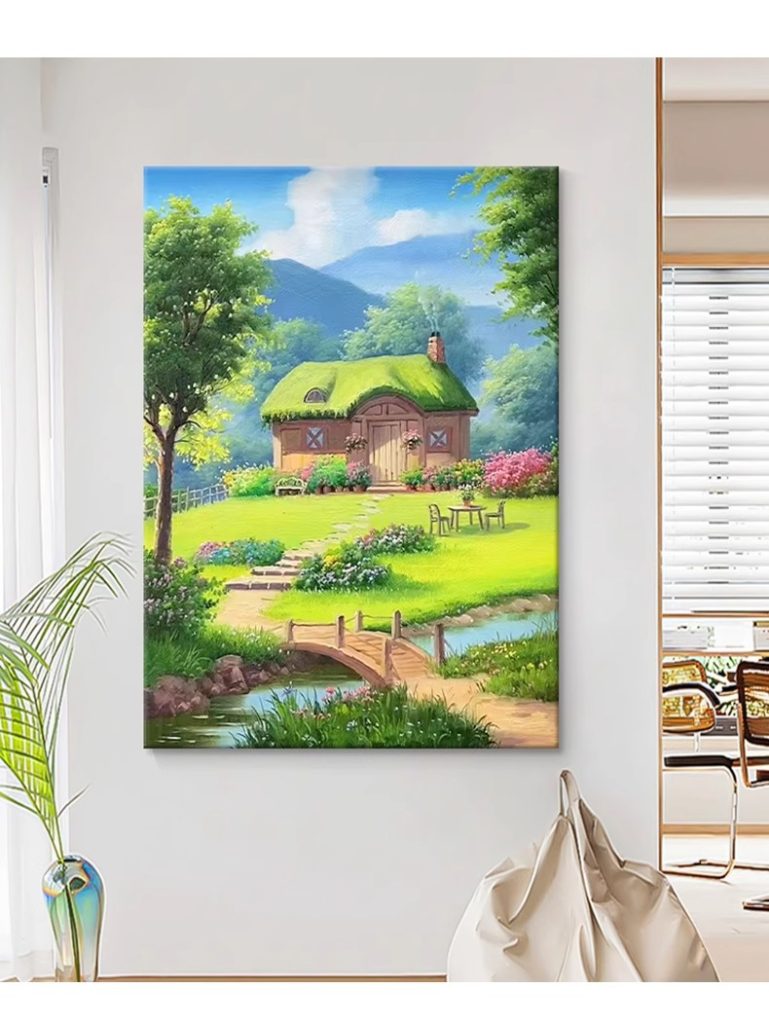
Crafting Immersive Forest Landscapes in Hand-Painted Oil Art: Key Techniques for Depth and Atmosphere
Painting forests demands a balance of intricate detail and broad compositional harmony to evoke the serenity, mystery, or vibrancy of wooded scenes. Below are strategies to master texture, light, and color, ensuring your forest landscapes feel alive and invite viewers to explore their depths.
Layering Foliage with Varied Brushwork and Texture
- Diverse Brush Strokes for Natural Chaos: Forests thrive on visual complexity, so avoid uniform strokes. Use a fan brush to create feathery pine needles, a palette knife for thick, impasto leaves, and a round brush for delicate twigs. Vary pressure and direction to mimic how branches overlap and sunlight filters through canopies. For example, paint distant trees with loose, horizontal strokes to suggest volume, while foreground foliage demands sharper, overlapping marks.
- Negative Space Techniques: Instead of painting every leaf, define shapes by leaving gaps or using the background color. This approach works well for dense thickets—paint the trunk and a few key branches, then use the surrounding green tones to imply foliage. For sunlit areas, scrape away wet paint with a toothbrush or old credit card to reveal lighter underlayers, simulating dappled light.
- Seasonal Foliage Adaptations: Adjust your palette and texture to reflect the time of year. Spring forests might feature soft, pastel greens with tiny buds painted as speckles of yellow or pink. Autumn scenes require bold oranges, reds, and golds, applied with dry brushing to create a crisp, fallen-leaf effect. Winter forests rely on muted grays and blues, with sparse branches and subtle snow accents using a stiff brush for texture.
Manipulating Light to Create Mood and Depth
- Golden Hour Glow: Capture the warmth of early morning or late afternoon by mixing yellow ochre, raw sienna, and a touch of red into your highlights. Paint sunlight filtering through trees with diagonal strokes of pale yellow, gradually blending into cooler greens and blues in shadowed areas. For realism, let the light hit unevenly—a single patch of bright grass amid dark trunks draws the eye and adds drama.
- Mystical Fog and Mist: Soften distant trees with thin washes of white or gray, applying more transparency as elements recede. Use a dry brush to lift paint in swirling patterns, mimicking fog’s movement. For a spooky atmosphere, deepen shadows with indigo or violet, leaving only hints of green in the foliage. In dense fog, reduce contrast entirely, painting midground trees as silhouettes with barely visible details.
- Dappled Light Effects: Simulate sunlight breaking through leaves by dabbing small, irregular highlights onto the forest floor. Use a dry brush dipped in titanium white or a light yellow-green, varying the size and spacing of dots to avoid artificiality. In shadowed areas, add subtle touches of blue or purple to cool the tones, reinforcing the contrast between light and dark.
Balancing Composition with Natural Elements and Focal Points
- Leading Lines Through the Trees: Guide the viewer’s eye using trunks, fallen logs, or winding paths. A diagonal line of trees receding into the distance creates depth, while a curved path lined with ferns adds rhythm. Position your focal point (a sunlit clearing, a hidden stream, or a deer) at the end of these lines to ensure cohesion.
- Foreground, Midground, Background Hierarchy: Establish spatial relationships by varying detail and color saturation. Paint foreground trees with intricate bark textures and vibrant greens, midground trees with softer edges and muted tones, and background foliage as shapeless blobs of blue-gray. This progression mimics how the human eye perceives distance, making the scene feel expansive.
- Human and Animal Presence: Add subtle signs of life to inject scale and narrative. A tiny figure walking along a trail, a bird perched on a branch, or a flash of red from a backpack can break monotony without dominating the scene. Paint these elements with sharper contrast than their surroundings—a dark silhouette against a sunlit backdrop ensures they’re noticeable yet harmonious.
Incorporating Undergrowth and Ground Texture for Realism
- Varied Plant Life: Forests teem with diversity, so include ferns, mushrooms, wildflowers, or moss to enrich the scene. Paint ferns with delicate, arching strokes in shades of green and yellow, while mushrooms require soft, rounded forms with pale caps and dark stems. Use a sponge to dab moss onto rocks or tree trunks, blending greens and grays for a natural look.
- Ground Materials and Reflections: Depict the forest floor with a mix of textures—dry leaves, wet mud, or rocky patches. For fallen leaves, use a stippling technique with a stiff brush and autumnal colors. Wet areas should reflect surrounding greens and blues, painted with horizontal strokes to imply stillness. Add tiny details like acorns or pinecones to enhance believability.
- Water Features as Mirrors: If including a stream or pond, mirror the sky and trees in its surface but distort them slightly for realism. Paint ripples with curved lines of lighter and darker blue, and use a dry brush to lift paint in the center of highlights, suggesting glints of sunlight. For a mysterious touch, add a faint reflection of an unseen tree branch overhead.
By integrating these techniques, your forest landscapes will transcend mere representation, becoming immersive worlds that resonate with texture, light, and life. The interplay of detailed foregrounds, atmospheric midgrounds, and soft backgrounds ensures viewers feel both the grandeur of the trees and the intimacy of hidden groves, fostering a connection to nature’s quiet complexity.